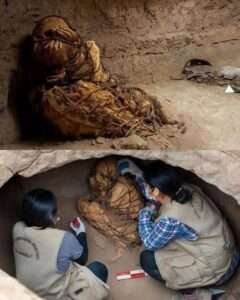
In 2021, a fascinating discovery was made in Peru as archaeologists from the National University of San Marcos unearthed a mysterious mummy within an underground tomb in Cajamarquilla, located just 15.5 miles inland from Lima, the capital city of Peru. The mummy, estimated to be between 800 and 1200 years old, was found fully bound in ropes, with its hands delicately covering its face.
Despite the initial chilling impression of the mummy’s posed position – tightly bound and in a foetal stance – researchers quickly identified it as a traditional southern Peruvian burial custom. This unique burial practice sheds light on the ancient funeral rituals of the region, offering valuable insights into the cultural and religious beliefs of the people who lived in the area centuries ago.
Alongside the enigmatic mummy, the tomb also revealed a collection of artifacts including ceramics, vegetable remnants, and stone tools. These additional findings provide further clues into the daily lives and customs of the ancient inhabitants of Cajamarquilla, offering archaeologists a glimpse into the rich history and traditions of the past.
The discovery of this well-preserved mummy and accompanying artifacts not only adds to our understanding of the ancient Peruvian civilizations but also highlights the significance of preserving and studying archaeological sites. By carefully excavating and examining these historical treasures, researchers can unravel the mysteries of the past and piece together the intricate tapestry of human history.
As we continue to delve into the secrets hidden beneath the earth’s surface, each new discovery brings us closer to unraveling the ancient enigmas of civilizations long gone. The mummy found in the tomb in Peru serves as a poignant reminder of the enduring legacy left behind by our predecessors, urging us to explore, learn, and appreciate the rich heritage that shapes our present-day world.